
Emails and texts that bring a cart back
The three messages that bring a cart back, when to send them, and when to hold the discount.
Someone fills a cart, gets to the last step, and leaves. It happens to most of them. Roughly seven in ten carts are abandoned before purchase, and the Baymard Institute puts the average at 70.19%. Most of the time nothing broke. They got a phone call, a crying kid, a train to catch. The cart is still good. It just needs a reason to come back.
A short sequence of messages does that. Not a barrage. Three messages, spaced out, each doing one job. Sent well, they bring back a few percent of the carts they reach, and those are sales you had already written off.
The three messages
Think of it as a conversation with sensible pauses, not a campaign.
About an hour later: the reminder
The first message is plain. Here is your cart, here is the link back, that is it. No discount. An hour out, most people just got distracted, and a quiet nudge is all it takes. Write the subject line the way a person would, your cart is still here, not a countdown clock. Show the item, the price, and one button that drops them straight into a pre-filled cart.
The next day: the answer
If they did not come back, the reminder was not the problem. Something gave them pause. The second message, about a day later, answers it before they have to ask. Free returns, real delivery times, the sizing note, a line from a customer who had the same doubt. Still no code. You are removing the reason to hesitate, not paying them to stop hesitating.
Day three: the offer, if you use one
Now, and only now, an incentive earns its place. Lead with free shipping. It costs less than a percentage off and shoppers weigh it the same. Keep a small code in reserve for anything that follows. Day three is where you learn whether a reminder alone was ever going to be enough.
Hold the discount
The temptation is to open with a code. Do not. If every abandoned cart triggers a discount, you teach people to abandon on purpose, and you hand margin to the shoppers who were coming back anyway. Lead with the reminder. Keep the code for the one who actually needs it, in the last message, not the first.
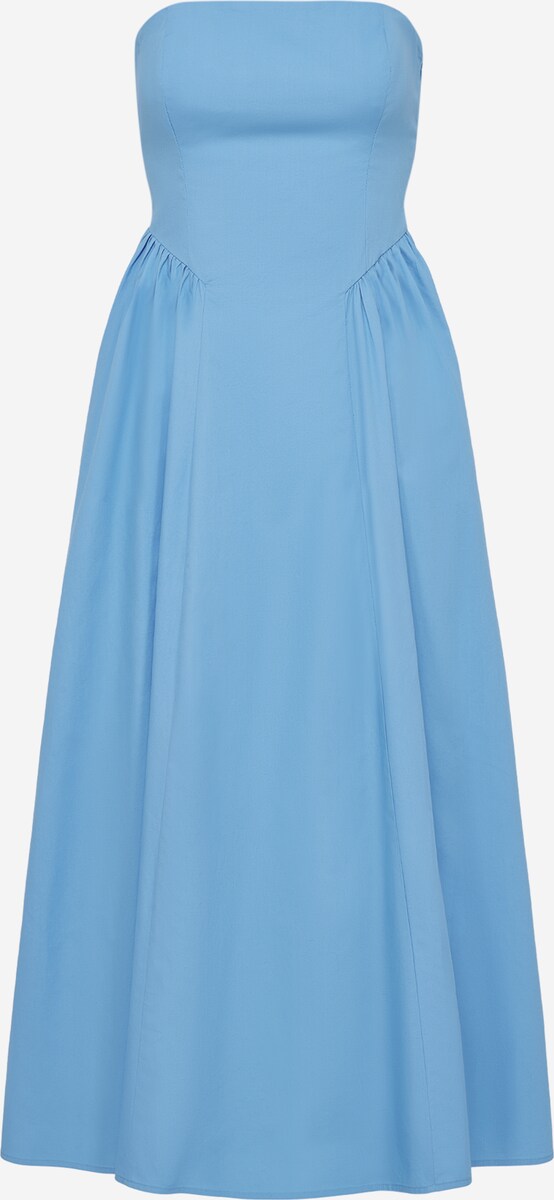
Three timed messages brought one cart back
Texts, kept short
SMS is the fast lane. It gets read within minutes, which is exactly why the rules are stricter.
- Get consent first. A text to someone who never opted in is a complaint, not a recovery. Collect the number and the permission together, at checkout.
- One line, under 160 characters. The store, the item, a link. No paragraph, no image, no menu.
- Send while it is warm, not while they are asleep. The first few hours work best. Never after 9pm local time. A buzz at 11pm loses the customer you were trying to keep.
A text that follows those rules reads like this:
Your Léger cart is still here. The ‘Vianne’ dress is waiting: [link]
Sixty-odd characters, no discount, one link. That is the whole message.
What goes in the email
Keep it to the cart. The essentials earn their place. Everything else is noise.
- Always: the product image, the name, the price, and one button back to a pre-filled cart, plus a line on how to reach a person if something is wrong.
- Later in the sequence: a review that speaks to the common doubt, the return policy in plain words, and, in the last message, the code.
- Leave out: a wall of other products, five competing buttons, a countdown timer that resets on reload. They read as pressure, and pressure is why people leave.
What to actually watch
One number tells you if it is working: recovery. Of the carts that get a message, how many come back. Klaviyo’s data on 143,000 abandoned-cart flows puts the average at 3.33% of recipients, with the best tenth reaching 7.69%. Omnisend reports closer to 1.5% per email. So a few percent is normal, and high single digits is very good. Anyone promising to recover 10 to 15% of every cart is selling something.
| Metric | Value | Source |
|---|---|---|
| Carts left before purchase, average | 70.19% | Baymard Institute, 2025 |
| Abandoned-cart email, open rate | 35.75% to 50.5% | Omnisend 2025; Klaviyo 2024 |
| Recovered orders per recipient, average | 1.51% to 3.33% | Omnisend 2025; Klaviyo 2024 |
| Recovered orders per recipient, best 10% | 7.69% | Klaviyo, 2024 |
Watch the other direction too. If unsubscribes or spam complaints climb, you are sending too often or to the wrong people. Cut the frequency before you cut the list.
Where this leaves you
Three messages, timed, with the discount held to the end. Most of the recovery comes from the reminder alone. The code is for the few it does not reach.
One gap the sequence cannot close on its own: the message brings someone back, but the thing that stalled them is often a question an email cannot answer. Will it arrive by Friday. Does it run small. When they land back on the page late at night, Linra is the copilot that answers in the thread, so the return does not stall a second time. The sequence gets them to the door. Someone still has to open it.